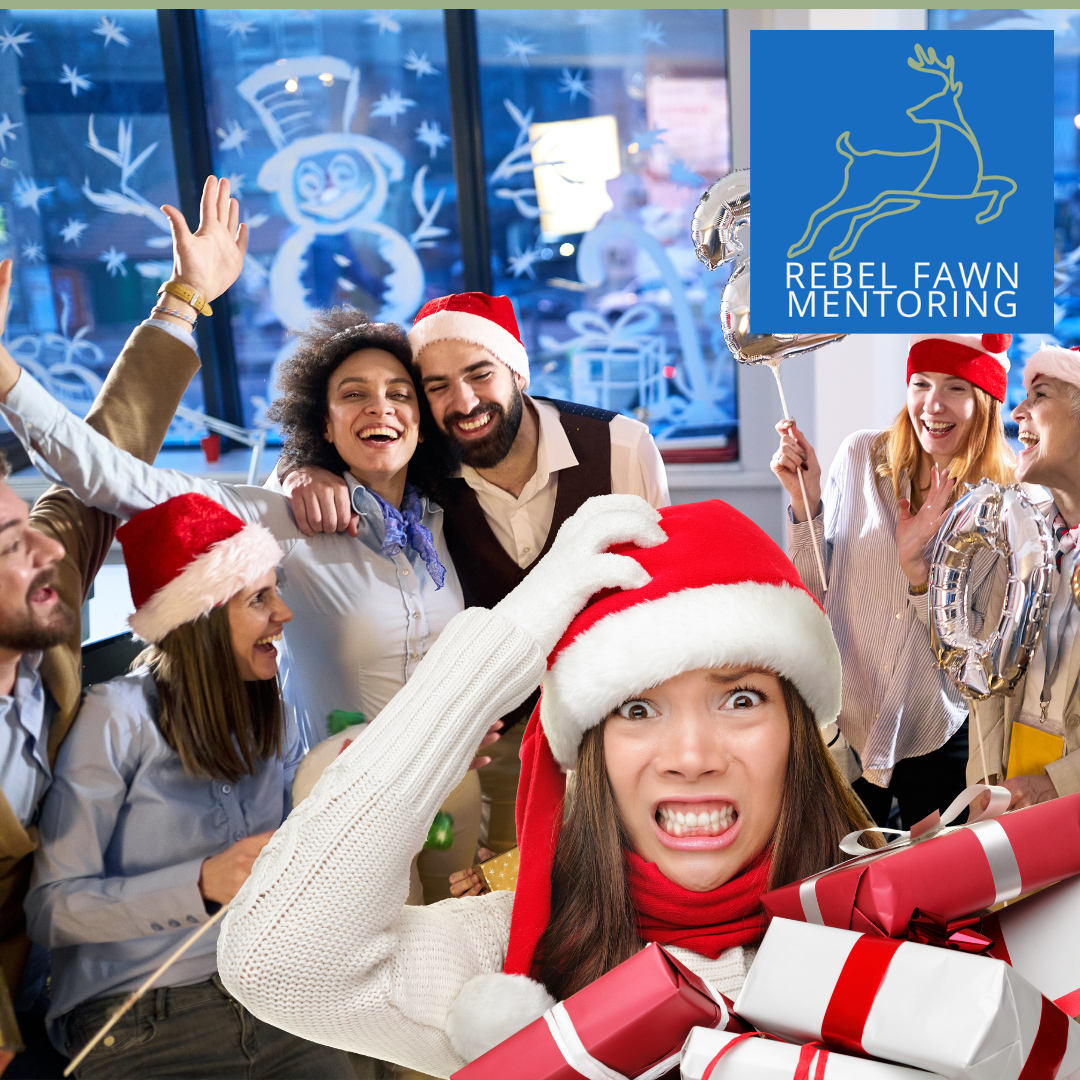
TL;DR: The holidays trigger old survival patterns, especially the fawn response (people-pleasing to stay safe). When you return to your family of origin, your nervous system remembers what your mind tried to forget. You're not weak. You're not broken. You learned to disappear to survive. Understanding this pattern gives you permission to stop performing and start showing up as yourself.
What You Need to Know Right Now
• The fawn response is a trauma survival strategy where you people-please to stay safe
• Holiday gatherings with family of origin often trigger automatic regression to old patterns
• Your nervous system learned this response early, before you had words for what was happening
• Recognizing fawning as survival (not character flaw) shifts shame into compassionate awareness
• Recovery means catching yourself mid-performance and choosing to stay present without disappearing
My Truth: I Thought I Was Being a Good Daughter
Every Thanksgiving, I'd walk through my childhood front door and become someone else.
The version who didn't disagree. Who anticipated everyone's needs before they voiced them. Who smiled through conversations that made my chest tight.
I thought this was love.
Turns out? Survival.
What Is the Fawn Response?
Psychotherapist Pete Walker named this pattern the "fawn response." It's the fourth survival response alongside fight, flight, and freeze.
Fawn types seek safety by merging with the wishes, needs, and demands of others. They act as if the price of admission to any relationship is forfeiting all their needs, rights, preferences, and boundaries.
Here's what makes fawning so sneaky: it doesn't look like trauma.
It looks like being the peacemaker. The reliable one. The child who never caused problems.
Trauma expert Ingrid Clayton explains that fawning appears as excellence, not survival. The internal cost? Chronic anxiety, loss of identity, physical stress. All invisible.
Bottom line: You learned to make yourself appealing to the threat because safety depended on it.
Why Do Holidays Trigger the Fawn Response?
The data tells part of the story. 35% of Americans cite challenging family dynamics as a top holiday stressor. Nearly 60% worry that difficult discussions will derail their gatherings.
For those of us with fawn patterns, though, the holidays aren't stressful.
They're a full-body regression.
You walk into that familiar space and your nervous system remembers what your mind tried to forget.
Research shows this is biological, not weakness. Adults regress when insecurity, fear, and anger arise. We revert to a point in development when we felt safer and when stress was nonexistent. Trauma responses become so automatic that stress hormones are released even without the stimulus of a threat. Over time, this leads to neurological changes and nervous system dysfunction.
The conversations become performative. You fulfill expected roles. You exchange polite words while your true self sits locked behind your ribs, screaming.
Trauma therapist Shreya Mandal puts it this way: "Fawning is not about kindness. It's about survival. Sometimes survival sounds like a yes when your soul is begging to say no."
What this means for you: Trauma-exposed people show deficits in automatic regulation of emotional processing. Your brain fails to dampen old responses during emotional conflict. Your body remembers the environment that taught you to disappear. Walking back into it activates the old program.
The Loneliness of Being Surrounded by Family
Here's the paradox I lived for years: you're sitting at a table full of family, and you feel profoundly alone.
People who fawn hide their true selves because judgment or retaliation feels too dangerous. You prioritize everyone else's comfort and reactions. You never get a chance to express yourself.
You're there, but you're not present.
You're performing connection, not experiencing it.
Reality check: Connection requires both people to show up. When you're in fawn mode, you've already left the room.
How Do You Recognize Fawning in Yourself?
Walker explains that trauma-based patterns get learned very early. A child gives up protesting to avoid retaliation. You were trained by your environment to repress and deny your feelings.
While traumatic events may be over, their impacts live on in your body for decades. Adults who had traumatic experiences in childhood are more likely to experience neurological dysfunction as they get older.
Signs you're fawning:
• Saying yes when your whole body wants to say no
• Anticipating needs before anyone asks
• Feeling responsible for everyone's emotional state
• Agreeing with opinions you don't actually hold
• Leaving conversations feeling drained and invisible
Recovery starts with noticing your patterns and asking: "Am I saying this to please someone else? Is it at my own expense?"
The shift: You start catching yourself mid-performance. That pause creates the space where choice lives.
What Changed When I Understood This Pattern
When I first learned about the fawn response, something in me exhaled.
One woman described it this way: "I felt seen for the first time in my life. I made sense to myself in a way that didn't inspire shame."
This is the permission you've been waiting for: your response is survival, not weakness.
You weren't being overly accommodating because something was wrong with you. You were adapting to an environment where disagreement felt dangerous. Where your needs seemed like burdens. Where love felt conditional on your ability to disappear.
Understanding this doesn't erase the pattern. But it shifts the story from "I'm broken" to "I learned to protect myself the only way I could."
What matters most: You survived. Now you get to choose something different.
What Does Freedom From Fawning Look Like?
I won't lie to you. Understanding the fawn response doesn't make family gatherings easy.
But awareness creates space between stimulus and response.
You start recognizing when your nervous system kicks into old patterns. You catch yourself mid-performance and remember you have a choice.
Sometimes that choice looks like setting a boundary.
Sometimes it looks like leaving early.
Sometimes it looks like staying but refusing to abandon yourself in the process.
The holidays will always carry the weight of family history. But you don't have to carry the weight of disappearing to survive them.
You're allowed to be present without performing.
You're allowed to be kind without erasing yourself.
You're allowed to go home for the holidays without going back to survival mode.
Permission granted.
Ready to Break Free From the Fawn Response?
My story started in a place darker than most Thanksgiving dinners. I went from nearly ending my life to building a life where I get to be the fun "hot-bitch" mom I never thought I deserved to be.
If you're tired of performing, people-pleasing, and disappearing to survive, I wrote something for you.
Download my free ebook: "From Almost Ending It All to Fun 'Hot-Bitch' Mom!"
Inside, you'll find the raw truth about my journey from professional ballerina trapped in the fawn response to rebel mentor helping other women reclaim their voices.
Get your free copy here and start your own rebellion.
Frequently Asked Questions
Q: Is the fawn response the same as being kind or generous?
A: No. Kindness comes from choice. Fawning comes from fear. When you're fawning, your nervous system believes safety depends on pleasing others. True generosity happens when you're not sacrificing yourself to survive.
Q: Can you have multiple trauma responses at once?
A: Yes. Many people use different responses in different situations. You might fight at work, freeze with a partner, and fawn with family. Your nervous system picks what worked before in similar contexts.
Q: How do I stop fawning if it's automatic?
A: Start with awareness, not perfection. Notice when you're doing it. Ask yourself: "Am I saying this because I want to, or because I'm afraid of what happens if I don't?" That pause between noticing and responding is where your power lives.
Q: Will my family understand if I stop fawning?
A: Some will. Some won't. The people who benefited from your self-abandonment might resist your boundaries. Your job isn't to manage their comfort. Your job is to stop abandoning yourself.
Q: Is it possible to heal the fawn response completely?
A: Healing isn't about erasing the response. It's about building awareness and choice. Your nervous system learned this pattern because it kept you safe. With time and practice, you teach it there are other options now.
Q: What if I feel guilty for setting boundaries with family?
A: Guilt is part of the fawn response. You were taught that your needs are burdens and your boundaries are betrayals. Feeling guilty doesn't mean you're doing something wrong. It means you're doing something different.
Q: How long does it take to change fawn patterns?
A: There's no timeline. This is deep nervous system reprogramming. Some people notice shifts in weeks. Others work on it for years. What matters is the direction you're moving, not the speed.
Q: Do I need therapy to recover from fawning?
A: Therapy helps, especially trauma-informed approaches like EMDR or somatic therapy. But recovery also happens through self-awareness, reading, community, and practicing new responses. Find what works for your life and resources.
Key Takeaways
• The fawn response is a survival pattern where you people-please to stay safe, not a character flaw or weakness
• Holiday gatherings with family of origin trigger automatic nervous system responses learned in childhood when disagreement or needs felt dangerous
• Fawning looks like excellence from the outside (the peacemaker, the reliable one) but costs you your identity, voice, and authentic connection
• Recognition shifts everything because understanding your pattern as survival (not brokenness) creates compassionate awareness instead of shame
• Recovery isn't perfection but rather building the space between trigger and response where you catch yourself mid-performance and choose differently
• You're allowed to be present without performing, to set boundaries without guilt, and to go home for the holidays without going back to survival mode
• Permission granted: your needs matter, your voice matters, and you don't have to disappear to deserve love


Comments
Post a Comment
We appreciate your comments!