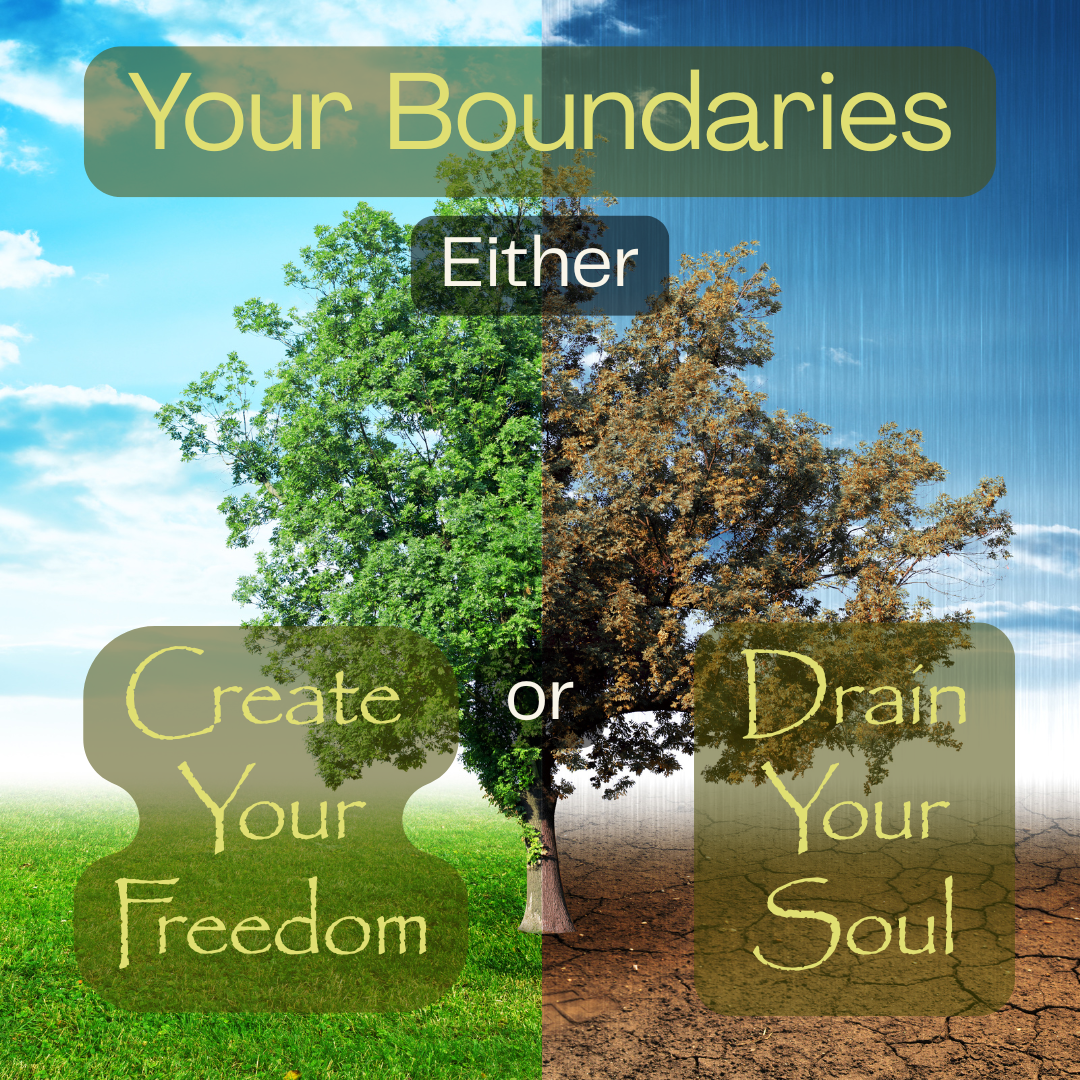
You think you're finally setting boundaries.
After years of saying yes to everything, putting everyone else first, and losing yourself in the process, you're finally saying no. You're taking care of yourself. You're setting limits.
Except you're not.
What you're actually doing is shutting down. And there's a world of difference between the two that could save your life.
The Paralysis Masquerading as Progress
Real boundary-setting comes from a place of self-protection and empowerment. What you're experiencing feels different because it’s coming from a place of hopelessness and being ready to just giving up completely. The literal ‘last straw’.
And, it’s actually a warning sign of impending breakdown.
The overwhelm has become so great that you can barely manage the basics anymore. Getting the kids to school feels monumental. Normal daily tasks happen in a daze rather than with any real coherence.
You say no to requests, but not because you're protecting your energy or honoring your needs. You say no because you literally cannot handle one more thing. Or, more accurately, you no longer even care.
This isn't boundary-setting. This is your nervous system hitting the emergency brake.
The difference matters more than you realize. One leads to empowerment. The other can lead somewhere much darker.
The Perfect Storm That Creates This Trap
Single mothers face a unique constellation of pressures that create this dangerous confusion between boundaries and breakdown.
Research shows that 32% of single mothers experience moderate or severe psychological distress compared to just 19% of married mothers. But the numbers don't capture the full picture.
The perfect storm builds from multiple losses happening simultaneously.
First comes grief. Maybe you lost a parent young, like losing your mother to cancer at 18. Then comes the loss of identity. Your career disappears into marriage and motherhood, taking your sense of self with it.
Add special needs children who require constant attention and advocacy. Layer on a partner who checks out emotionally, leaving you to handle everything alone even while married.
But the most insidious element is isolation.
If you've been in a relationship with a narcissist, isolation isn't accidental. It's engineered. You play "happy" so convincingly that even your own family can't see what's happening behind closed doors.
Your sister and her family were repulsed by your husband, but they never tell you. Instead, you just spend less time together. The distance grows, and you don't understand why.
Even places that should offer you support become sources of judgment. Church communities offer platitudes wrapped in criticism. Friends give advice that reveals they don't really understand.
You learn that asking for help either gets you nowhere or makes you feel worse. So you stop asking.
The Fawn Response Sets the Trap
What makes this particularly devastating for certain single mothers is something called the fawn trauma response.
Psychotherapist Pete Walker identified fawning as the fourth trauma response alongside fight, flight, and freeze. Fawning means seeking safety by becoming more appealing to the threat.
You merge with others' wishes, needs, and demands. You act as if the price of admission to any relationship is giving up all your needs, rights, preferences, and boundaries.
The fawn trauma response doesn't create a trap. It is the trap.
It prepares you to be prey. Prey to narcissists who are more than happy to drain you of your emotional stability and pretty much your entire sense of self.
The perpetual need to please others while constantly feeling like you're failing at it creates an exhausting cycle. You try harder, do more, which makes you even more exhausted and less effective.
On and on it goes.
When you don't understand this is a trauma response, you only feel that something is fundamentally wrong with you. You're weak. You're a mess. You're a failure.
All of this builds to a place where you start wondering: What's the point? Why am I still here taking up space?
The Critical Window Between Life and Death
Here's where things get dangerous.
When you finally hit that wall of emotional paralysis, something shifts. You stop caring what people think. You start saying no to everything. This is a warning sign.
This feels like progress. Finally, some boundaries!
But there's a crucial difference between healthy boundary-setting and what's actually happening.
If you're still in recovery from fawn responses, even as you're learning to grow some antlers, you'll still care somewhat about consequences. You'll worry about how people perceive you or what might happen.
That caring, even if it's diminished, indicates you're moving toward healthy boundaries.
But when you truly don't care about any consequences because you don't want to be here anymore, you've entered a critical window.
There's actually a benefit to this not caring. As fawns, we care way too much about everything. That's a huge part of the problem.
But this window is narrow and dangerous.
The not caring could spur you out of the fawn response and finally motivate you to do something for yourself. But this has to happen quickly before the window closes and that not caring goes all the way to the grave.
Too many people who share this trauma response pattern never make it out of that window.
The Power You Never Knew You Had
What makes the difference between life and death in that critical window?
Awareness of your actual power. You absolutely have the power to create the life you really want.
I believe that, for most people trapped in fawn responses, this is completely new information. You've been conditioned your entire life to give your power away, to believe your needs don't matter, to think your only value lies in serving others.
The power to create the life you actually want feels foreign, almost impossible to believe.
But it's real.
This power means being able to dream about what you actually want again. Those dreams got pushed so far onto the back burner they weren't even in the kitchen anymore!
It means changing your actual thought processes. Instead of being stuck in what we might call the "Kicked, Lost, Ignored, Exhausted" (K-LIE) playlist, you can discover and turn up the volume on your "Kick-ass, Hot" (K-HOT) playlist.
It means understanding how this trauma response works and recognizing that what once kept you safe as a child is now stealing your life as an adult.
The fawn response served a purpose when you were small and vulnerable. But now it's become a prison.
Breaking Free From the Silent Trap
Recognition is the first step, but it's not enough.
You need practical tools to distinguish between healthy boundaries and dangerous withdrawal. You need strategies that work specifically for single mothers juggling impossible loads.
Real boundaries come from a place of self-respect, not self-destruction. They're about protecting your energy so you can show up fully for what matters most, including your children.
Withdrawal boundaries come from depletion and despair. They're about shutting down because you can't handle any more input.
The difference isn't always obvious in the moment, but the underlying energy is completely different.
Healthy boundaries feel empowering, even when they're difficult to maintain. Withdrawal boundaries feel like giving up.
Learning to tell the difference could literally save your life.
The Rebel Path Forward
Breaking free from fawn responses isn't about becoming selfish or uncaring. It's about becoming what we might call a Rebel Fawn.
A rebel in this context means someone who takes care of themselves. Someone who recognizes their own worth and refuses to accept less than they deserve.
This transformation requires understanding the specific challenges single mothers face. You're trying to model healthy boundaries for your children while potentially lacking these skills yourself.
You're managing co-parenting relationships that may trigger your people-pleasing patterns. You're balancing self-care with childcare responsibilities when saying no feels impossible.
But here's what changes everything: realizing that the only person you need to please, or even can please, is yourself.
This isn't selfish. It's survival.
When you understand that your fawn response has made you vulnerable to narcissistic targeting and exploitation, taking care of yourself becomes a radical act of rebellion.
You're not just setting boundaries. You're reclaiming your life.
The confusion between withdrawal and boundary-setting is dangerous because it can trap you in that critical window where not caring becomes not wanting to live.
Note: If you feel you’re at this point call or text 988 the Suicide & Crisis Lifeline.
But when you recognize the difference, when you understand your actual power, when you learn to create the life you want rather than just surviving the life you have, everything changes.
You move from prey to a powerful creator of your own destiny.
That's not just boundary-setting. That's revolution.
And it starts with recognizing that your boundaries should make you feel more alive, not less.
If they don't, you're not setting boundaries. You're shutting down.
And you deserve so much more than that.


Comments
Post a Comment
We appreciate your comments!